Blog header

Blog header

Friday, August 9, 2013

#138 - China’s Pollution-Fighting Budget Will Have to be Bigger Than its Military Budget

We mentioned air pollution levels in China in a previous post.


The folks at Next Big Future have distilled a couple of articles from various sources into this interesting post about China’s plans for remediation.


A couple of the reader comments are also informative and worth reading.

Wednesday, August 7, 2013

#137 - This Caught our Interest Because We’re Into Hydrogen

We have been providing accurate hydrogen (H2) analysis for many years. Usually, the hydrogen equipment that our analyzers are hooked up to are quite large. Like this H2-cooled power generator:


This article from Wired features a much smaller handheld H2 generator for recharging phones. This is obviously for a very different purpose than the power generator shown above. Interesting stuff. May be coming soon to a store near you.

Photo: Tim Moynihan/WIRED

Friday, August 2, 2013

#136 - Coal Mine Gas Analysis Applications – Part 1

We recently posted some information about air analysis in mine shafts here and here. These discussions reminded me of another series of gas analysis inquiries that we had from the mining industry.

For literally centuries, the problem of subterranean coal mine fires has persisted in many areas of the world.

Just to mention a few:


A couple years ago, a coal mine facility in the southern United States approached us for assistance with gas analysis. In the initial development and construction phases, this mine was considered to be a dangerously high risk for a number of things including fires.

An elaborate system of tubes was built into the mine. These small tubes connected all areas of the mine to a centralized monitoring station. The gas atmosphere in any area of the mine can be accessed by sampling from one of the tubes in the ‘tube bundle’.


Example of tube bundle in underground mine.


Subsequent re-evaluation of the mine’s hazards lead to a down-grading of the fire risk consideration. However, the tube system had already been designed and installed. This allowed the mine to function as a giant research laboratory. Nova’s involvement with the mine began in this capacity in 2009-2010.

Application #1 – Mine Atmosphere Baseline Measurement

To evaluate the mine atmosphere at a somewhat generalized level, a portable analyzer was requested for these three gases and ranges:
Oxygen: 0 - 25.0%
Carbon Monoxide: 0 – 2,000 PPM
Carbon Dioxide: 0 – 3,000 PPM

For this application, long-term analysis of tubes in the bundle allowed for establishment of baseline levels in the mine upon which further research could be done. We provided a special version of the Model 375K for these measurements.

Even though this is only a portable instrument intended for temporary ‘spot-check’ type analysis, it has been running continuously on this experiment for a couple of years now. I think maybe we have replaced the built-in pump once. Other than that, the mine has been very impressed with the performance of this little analyzer. They have since bought one or two more of these units.

The baseline experiment required long-term analysis of each of the tubes in the mine bundle. So it seemed like a good idea to provide a reliable way of logging the data into a format that would allow further evaluation and research. So these versions of the Model 375K were provided with a 4-20mA analog output for each gas reading. A portable data logger was also provided. The outputs wrote to the datalogger during analysis. The data logger has a serial output which can be connected to a computer. Software on the computer captures the data on the logger.


Application #2 - Testing of Gas Diffusion through Coal Core Samples

The mine also briefly used the Model 375K to study a possible dynamic in spontaneous coal combustion. A coal core sample was set up in the lab with a known atmosphere on one side of the core sample. The side with the atmosphere, the ‘input’ side, was subjected to 1psig greater than the output side. The basic idea was that the pressure differential between the two sides would possibly force the gases through the coal to be released at the output side.


The analyzer would measure the output side to help evaluate the rate of gas movement through the coal in this mine. If gas moved through the coal at a particular rate, perhaps it could be a factor in the development of coal combustion in certain areas of the mine.

Last I heard, this experiment was abandoned because the diffusion rate even through a small core sample was insignificant enough to be eliminated as a source of concern. The research people at the mine suspected that to begin with, but there were sufficient reasons to run the experiment at least for a limited time.

Next post will discuss two other interesting gas analysis applications that came out of this mine facility. Part 2 is here.

For information on these and other gas analyzer systems, give Mike or Dave at Nova a call, or send us an e-mail.
1-800-295-3771
sales at nova-gas dot com
websales at nova-gas dot com
http://www.nova-gas.com/


Tuesday, July 30, 2013

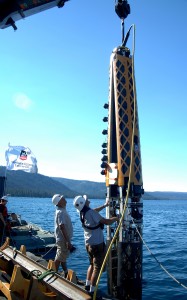
#135 - Submersible Robot Can Squeeze Through Ice for Antarctic Research

Interesting article from Wired regarding a collapsible robot that can be delivered to the water beneath Antarctic ice sheets.


The Sub-Ice Rover robot in its
slimmed-down configuration.
(Image credit: Ross Powell, NIU)

The Sub-Ice Rover folds out into deployment mode
during a test in Lake Tahoe, USA.
(Photo: Reed Scherer, Northern Illinois University)


Friday, July 26, 2013

#134 - Breathing Air in Mine Shafts – Part 2

Last post we talked about CO analysis of mine shaft input air. That application required a continuous monitor to be installed just after the air intake fans.

Even more recently, we had an inquiry about oxygen (O2) monitoring in a mine in India.

An intermittent-use portable instrument was required in this case. They wanted to measure the O2 levels in the mine and then progressively evaluate any variations detected throughout the mine. This could include variations between locations in the mine or variations over time.

The mine staff were also interested in using a portable instrument to check for O2 deficiency in enclosed spaces. For example, prior to cleaning a large tank, it is important to determine if there is sufficient oxygen present before entering the space.

Other gases in this particular mine are typically carbon monoxide and methane (CO & CH4). According to the current site information available, the CH4 is in the range of 0.3 to 0.5 % by vol and CO is in the range of 100 to 300 ppm. (That CO level seems high in our estimation. Levels over 100ppm are dangerous to human health. According to OSHA, the Permissible Exposure Limit of CO gas is currently 50 ppm over 8 hrs.) The temperature, pressure, and moisture were generally representative of ambient breathable air in a mine.

The Nova model requested was from the 600 Series. The ranges available are:
0-25.0% O2
0-200 PPM CO

This instrument has a built in sample pump and a separate display for each gas. Communication options include:
  • 4-20mA outputs; one per gas; for connection to customer's data collection system.
  • An optional detachable data logger can be supplied with the analyzer. The analyzer writes to the data logger via the 4-20mA outputs and can later be uploaded to your personal computer for trending and analysis. 
  • Alternatively, a serial output and data-logging software can be supplied. This option allows the analyzer to be directly connected to a computer during air analysis. (We don't sell computers; the customer uses their own.)


For information on these and other gas analyzer systems, give Mike or Dave at Nova a call, or send us an e-mail.
1-800-295-3771
sales at nova-gas dot com
websales at nova-gas dot com
http://www.nova-gas.com/

Thursday, July 18, 2013

#133 - Breathing Air in Mine Shafts – Part 1

Some mine shafts extend deep into the earth where the conditions are hazardous and the temperatures are high enough to be life threatening. For example, the TauTona Gold Mine in South Africa is currently the deepest mining operation in the world at 3.9km (2.4mi) deep. The rock face temperature in that mine can reach 60C (140F). 

We recently had a call from another gold mining operation in North America. The hazard of concern in this case was with the availability of fresh breathing air.

No doubt you have heard references to the ‘canary in a coal mine’. This expression is derived from the historical practice of taking caged canaries into mines. The canary has a small body and rapid breathing rate and metabolism. It will succumb to the effects of carbon monoxide or methane much sooner than an adult human. It therefore provided a portable early warning of life-threatening changes in the mine atmosphere.

In the North American gold mine application mentioned above, the issue of atmosphere concern originated not from mine itself, but from activity at the top level of the mine. Mines have air handling systems that are designed to supply breathable air and manage the temperature. Typically, a large fan and louver system draws fresh air from ground level and pumps it down into the mine. If the ground level areas surrounding the fan intake have a lot of vehicular traffic or other combustion processes, the baseline air being pulled into the mine may have an elevated level of carbon monoxide (CO). Vehicles and various engines in the mine will also contribute to the total CO in the mine atmosphere.


To ensure a safe baseline air input into the mine, a continuous CO monitor can be installed in the air flow after the fan. The monitor should be ranged for ppm analysis because the Permissible Exposure Limit of CO gas is currently 50 ppm over 8 hrs.* The monitor should have alarm set points with relay contacts to provide warning and allow automated controls to be initiated.


For this purpose, we have sold the Model 580 shown in our catalog here.

We have also provided engine exhaust analyzers for use in mines. See this post for more info. The picture and comments about the facility located somewhere in the Tien Shan Mountains in the Kyrgyz Republic (Kyrgyzstan) was a mining project that needed engine exhaust analysis for tuning the numerous small engines located throughout the mine.

There is a part 2 to this post here.

For information on these and other gas analyzer systems, give Mike or Dave at Nova a call, or send us an e-mail.
1-800-295-3771
sales at nova-gas dot com
websales at nova-gas dot com
http://www.nova-gas.com/

* PEL as established by US OSHA, by Time-Weighted Average


Thursday, July 11, 2013

#132 - Portable Flame Front Analysis in Oil Wells

A few years ago we had a call from an oil company in Louisiana USA that wanted a portable gas analyzer for oxygen, carbon dioxide and nitrogen for use in a large oil field of more than 200 wells. They were sampling from the top of oil wells after a flame front had been ignited at the bottom of the well. The subsequent discharge gas readings provided information about the status of the flame front and the geology of the oil-bearing stratum.

The sample itself was expected to have O2 / CO2 / CO / N2 / Ar / CH4 and traces of sulfurs & H2S. There was also a likelihood of oil vapor and moisture. The temperature of the sample was estimated to be 200F. The sample pressure was variable between atmospheric pressure and slightly above by a few psig.


Previously, they had been capturing a gas sample from each well in a Tedlar bag and transporting it to a laboratory for analysis by gas chromatograph or other methods. Once the 200 wells were tested, the whole process would repeat again the next week.

This process had several drawbacks:
  • Very time-consuming for analyzing many wells
  • Periodic bag failures resulted in missed tests for some wells
  • Transportation costs of samples to lab
  • Increased record-keeping requirements to track bag IDs
  • High cost for lab analyses
  • Long time delay between extracting sample and receiving results
  • Maintenance of inventories for bags and other associated accessories


The oil company decided to contact Nova to investigate the possibility of using a portable analyzer for in-situ measurement of the discharge gases instead of sending the samples to a lab. The analysis requirement was for O2 / CO2 / N2. We can only provide O2 & CO2. It was decided that these two gases would be sufficient for their needs. It was also decided that an explosion-proof or intrinsically safe instrument would not be needed in this application.

The Model 309WP was purchased with the following features:
  • Ranges: 0-25% O2 & 0-20% CO2
  • Built-in pump and regulator for variable sample pressures
  • Built-in re-chargeable battery to allow field use
  • Condensate removal system to catch condensed moisture
  • Oil vapor filter to remove oil vapors from sample gas
  • Durable case, weather-proof when closed
  • 4-20mA recorder output to allow use with data-loggers if desired


A year or two after the unit was delivered, we got it back for some minor servicing and a calibration. The company reported that the instrument was performing well and had saved them an enormous amount of time and money on their weekly flame front analysis. I suspect that this unit paid for itself in less than a month. The unit was also giving them their test results immediately, thus allowing them to take any corrective action on the wells in a timely manner.


We don’t do a lot of business in the petrochem market. But this inquiry was a perfect fit for us, and it was the ideal solution for a unique application.

For information on these and other gas analyzer systems, give Mike or Dave at Nova a call, or send us an e-mail.
1-800-295-3771
sales at nova-gas dot com
websales at nova-gas dot com
http://www.nova-gas.com/